
Confined masonry construction is one of the safest, most economical, and earthquake-resistant building systems used for residential houses in Pakistan. Due to awareness regarding seismic zones in pakistan and high construction costs, confined masonry is rapidly becoming popular for 5 Marla, 10 Marla, and low-rise houses.
In this complete guide, you will learn what confined masonry is, how it is constructed, its advantages, disadvantages, cost comparison, and why it is recommended in Pakistan.
What is Confined Masonry Construction?
Confined masonry is a structural system where masonry walls are confined by reinforced concrete (RCC) tie columns and horizontal bands. Unlike RCC frame structures, in confined masonry the walls are constructed first, and then RCC elements are cast around them.
This system performs exceptionally well during earthquakes because the masonry walls and RCC elements act together as a single structural unit.
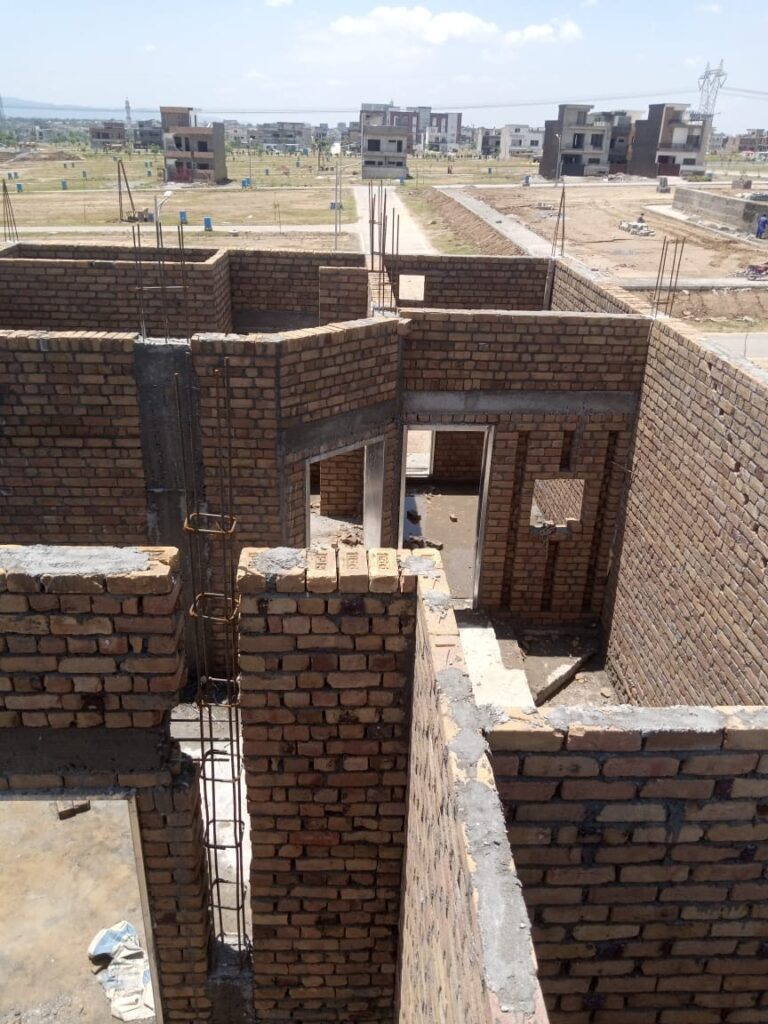
Why Confined Masonry is Important in Pakistan
Pakistan lies in an earthquake-prone region, especially KPK, AJK, Northern Areas, and Islamabad. Traditional unreinforced brick masonry performs poorly during seismic activity, whereas confined masonry offers:
- Improved seismic resistance
- reduced the construction cost as compared to RCC frame
- Simple construction techniques
- Less steel consumption
That is why engineers now recommend confined masonry for residential houses up to 3 storeys.
Main Components of Confined Masonry
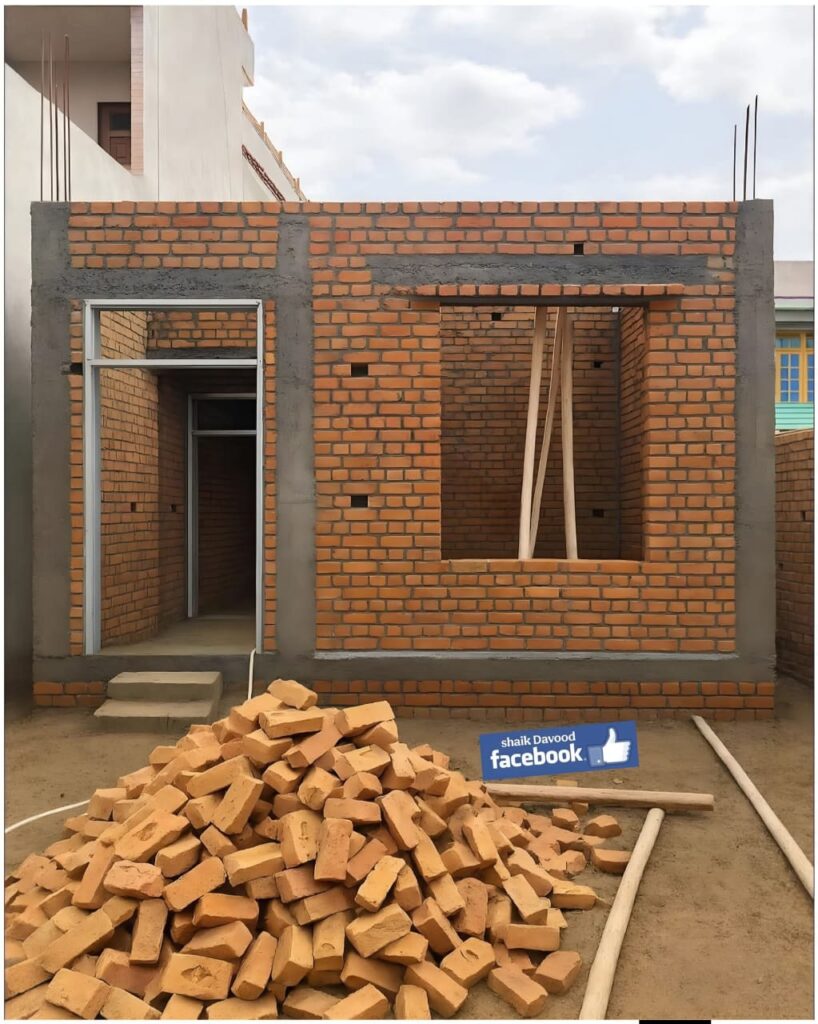
1. Masonry Walls
- Burnt clay bricks or concrete blocks
- Cement sand mortar (1:4 or 1:5)
- Walls act as load-bearing elements
👉 You can calculate brick masonry material using our Brick Masonry Quantity Calculator:
https://civilconstructionguide.com
2. Tie Columns (Vertical RC Members)
Tie columns are provided at:
- Wall corners
- Wall intersections
Typical Size: 9″ × 9″ or 9″ × 12″
Reinforcement: 4 bars (10–12 mm) with stirrups
3. Tie Beams / Bands (Horizontal RC Members)
Tie beams are essential to improve earthquake resistance.
Common bands include:
- Plinth band
- Lintel band
- Roof band
These bands prevent wall separation and cracking during seismic forces.
Step-by-Step Confined Masonry Construction Process
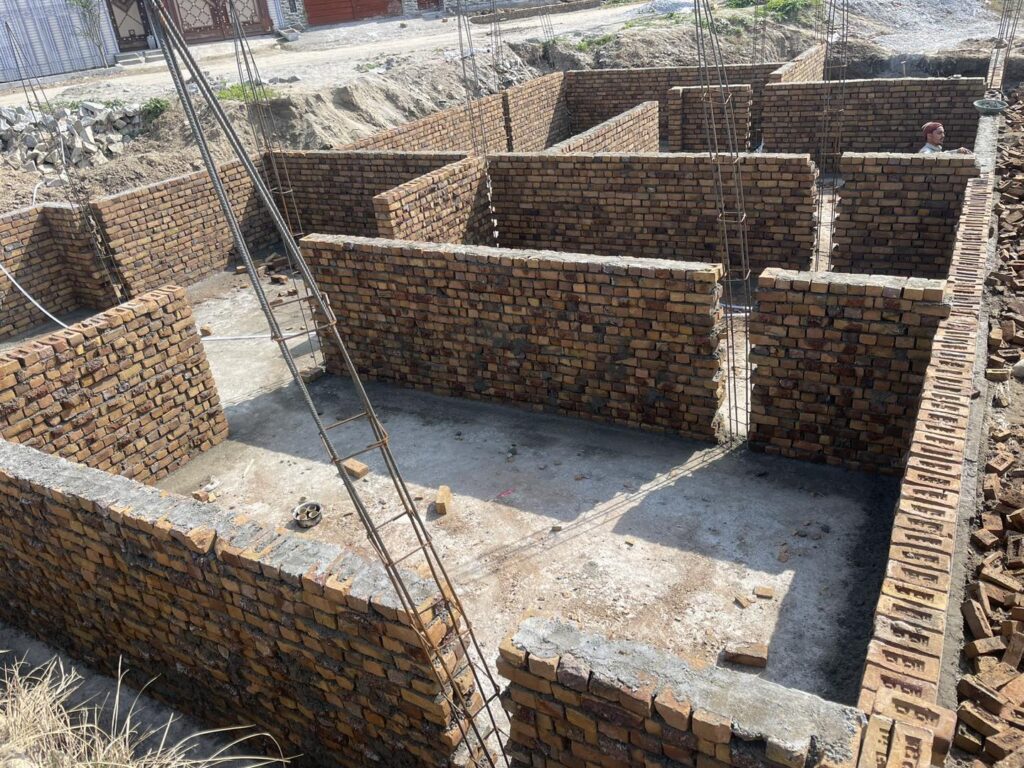
Step 1: Foundation Work
- Strip or raft foundation depending on soil condition
- Starter bars for tie columns provided in foundation
👉 Related guide: Foundation Construction Cost in Pakistan
https://civilconstructionguide.com
Step 2: Masonry Wall Construction
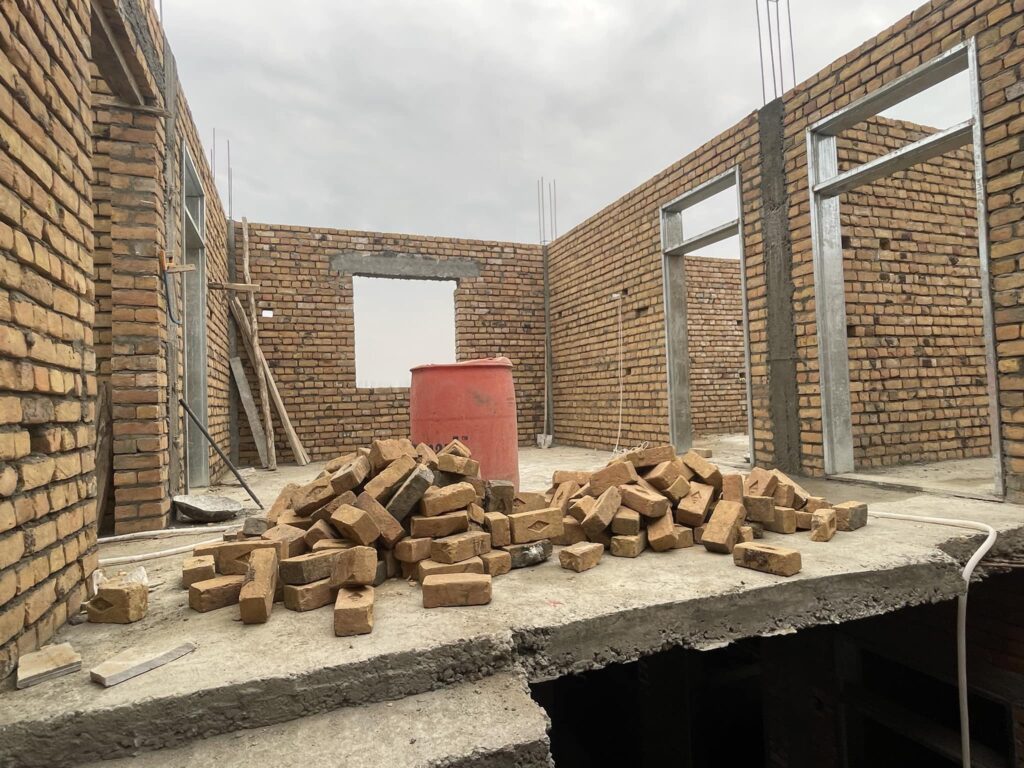
- Brick/block masonry constructed first
- Door and window openings left as per drawings
- Masonry raised up to lintel level
👉 Use our Plaster Quantity Calculator for finishing work:
https://civilconstructionguide.com/?cff-form=7
Step 3: Tie Column Casting
- Formwork installed around masonry
- Reinforcement fixed and anchored
- Concrete poured carefully
⚠ Tie columns must be cast after masonry, not before.
Step 4: Tie Beam / Band Construction
- RC bands cast at lintel and roof level
- Proper anchorage with tie columns ensured
Step 5: Roof Slab Construction
- RCC slab cast like normal construction
👉 Calculate slab materials using Slab Quantity Calculator:
https://civilconstructionguide.com
Confined Masonry vs RCC Frame Structure
| Feature | Confined Masonry | RCC Frame |
|---|---|---|
| Construction Cost | Lower | Higher |
| Steel Requirement | Less | More |
| Earthquake Performance | Excellent | Excellent |
| Construction Speed | Faster | Slower |
| Suitable Buildings | 1–3 Storey | Multi-storey |
Advantages of Confined Masonry
✔ Highly earthquake resistant
✔ Cost-effective for residential houses
✔ Simple and practical construction method
✔ Reduced steel consumption
✔ Ideal for 5 Marla & 10 Marla houses
Disadvantages of Confined Masonry
❌ Not suitable for high-rise buildings
❌ Proper detailing is mandatory
❌ Skilled supervision required
Common Construction Mistakes to Avoid
- Missing tie columns at wall junctions
- Weak mortar ratio
- Improper band anchorage
- Delayed casting of tie columns
Avoiding these mistakes ensures long-term structural safety.
Confined Masonry Cost in Pakistan
Confined masonry construction can reduce construction cost by 10–15% compared to RCC frame structures, especially for low-rise houses.
👉 Related reading: 5 Marla House Construction Cost
https://civilconstructionguide.com
Is Confined Masonry Safe for Houses?
Yes. if designed and executed properly, confined masonry is one of the safest construction systems for residential houses in seismic zones of Pakistan.
Final Conclusion
Confined masonry construction is a safe, economical, and practical solution for residential buildings in Pakistan. With proper engineering design and construction supervision, it offers excellent earthquake resistance and long-term durability.
If you are planning to build a house, confined masonry should definitely be considered.
Frequently Asked Questions (FAQ)
Is confined masonry cheaper than RCC frame?
Yes, confined masonry is generally 10–15% cheaper for low-rise houses.
How many storeys are allowed in confined masonry?
Usually up to 3 storeys, depending on design and soil conditions.
Is confined masonry approved in Pakistan?
Yes, it is recommended in seismic regions and supported by engineering standards.
📌 For more calculators, construction guides, and practical civil engineering content, visit:
https://civilconstructionguide.com

Muhammad Bilal is a Civil Engineer and Construction Specialist with an MS in Engineering Management and 13+ years of professional experience. He shares practical construction knowledge, cost estimation, and RCC site expertise at CivilConstructionGuide.com.
Pingback: Complete Guide to Steel Reinforcement in Building Construction: Types, Sizes, Bends & Bar Bending Schedule - Civil Construction Guide