
Introduction
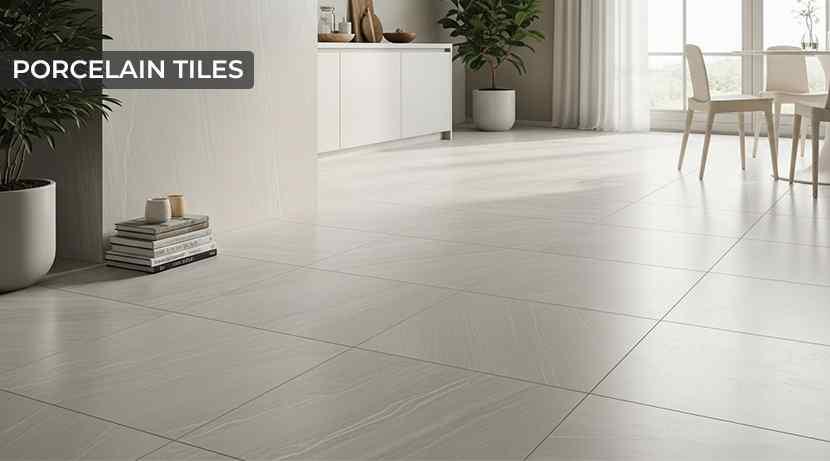
Porcelain tiles are one of the most durable and premium finishing materials used in modern construction. Due to their high strength, low water absorption, and elegant appearance, porcelain tiles are widely used in residential houses, commercial buildings, shopping malls, airports, and luxury projects.
Compared with ordinary ceramic tiles, porcelain tiles are denser, harder, and more resistant to wear, making them ideal for high-traffic areas and exterior applications.
In Pakistan, porcelain tiles have become increasingly popular due to modern architectural trends and improved tile manufacturing technologies.
What Are Porcelain Tiles? (Definition)
Porcelain tiles are a type of ceramic tile made from refined clay and minerals, fired at very high temperatures (1200–1400°C) to create a dense and highly durable product with very low water absorption.
Because of this manufacturing process, porcelain tiles are stronger and more resistant to moisture and stains than standard ceramic tiles.
Raw Materials Used in Porcelain Tiles
The main materials used in porcelain tile manufacturing include:
- Refined clay
- Silica sand
- Feldspar
- Kaolin
- Mineral pigments
These materials are mixed, pressed under high pressure, and fired in kilns to produce high-density tiles.
Types of Porcelain Tiles
1. Glazed Porcelain Tiles
These tiles have a protective glazed surface that provides color, texture, and design.
Common uses:
- Living rooms
- Bedrooms
- Bathrooms
- Kitchen floors
2. Unglazed Porcelain Tiles
Unglazed tiles have natural color throughout the body, making them more resistant to scratches.
Common uses:
- Commercial floors
- Industrial areas
- Shopping malls
3. Polished Porcelain Tiles
These tiles are mechanically polished to achieve a smooth glossy finish.
Uses:
- Luxury homes
- Hotel lobbies
- Showrooms
4. Matte Porcelain Tiles
Matte tiles have a non-slip surface, making them safer for wet areas.
Uses:
- Bathrooms
- Outdoor spaces
- Swimming pool areas
5. Full Body Porcelain Tiles
The entire tile body contains the same material and color.
Advantages:
- Very durable
- Scratch resistant
- Ideal for high traffic areas
Common Sizes of Porcelain Tiles
Porcelain tiles are available in a wide range of sizes including:
| Tile Size | Common Application |
|---|---|
| 12 × 12 inches | Small rooms |
| 24 × 24 inches | Living rooms |
| 24 × 48 inches | Modern interiors |
| 32 × 32 inches | Commercial buildings |
| 48 × 48 inches | Luxury flooring |
Large format tiles are increasingly popular in modern architecture.
Uses of Porcelain Tiles in Construction
Porcelain tiles are used in many building areas including:
- Living room flooring
- Bedroom flooring
- Kitchen floors
- Bathroom walls and floors
- Staircases
- Office buildings
- Shopping malls
- Outdoor terraces
- Parking areas
Advantages of Porcelain Tiles
✔ Extremely durable
✔ Very low water absorption
✔ Resistant to stains and chemicals
✔ Scratch resistant
✔ Suitable for indoor and outdoor use
✔ Wide range of designs and textures
✔ Long service life
Disadvantages of Porcelain Tiles
✘ Higher cost compared to ceramic tiles
✘ Heavier weight
✘ More difficult cutting and installation
✘ Requires professional installation
Installation Method (Basic Overview)
The general installation process includes:
- Surface preparation and leveling
- Application of tile adhesive or cement mortar
- Tile placement with alignment spacers
- Joint filling using grout
- Final cleaning and curing
Proper installation ensures long-term durability and aesthetic appearance.
Maintenance & Cleaning
Porcelain tiles require minimal maintenance.
Recommended practices include:
- Regular sweeping or vacuum cleaning
- Cleaning with mild detergent and water
- Avoiding harsh chemicals
- Periodic grout cleaning
Current Porcelain Tile Prices in Pakistan (2025)
Prices vary depending on brand, size, and design.
| Tile Quality | Price per Sq Ft (PKR) |
|---|---|
| Economy | 350 – 550 |
| Medium Quality | 550 – 900 |
| Premium / Imported | 900 – 2000 |
Large format tiles generally cost more due to manufacturing and transportation factors.
Popular Porcelain Tile Brands Available in Pakistan
Local Manufacturers
- Master Tiles
Website: https://www.mastertiles.com - Shabbir Tiles (STILE)
Website: https://www.stile.com.pk - Karam Ceramics
Website: https://www.karamceramics.com
International Brands Available in Pakistan
- RAK Ceramics
Website: https://www.rakceramics.com - Porcelanosa
Website: https://www.porcelanosa.com - Kajaria Ceramics
Website: https://www.kajariaceramics.com
Important Tips Before Buying Porcelain Tiles
Before selecting porcelain tiles, consider the following factors:
- Tile size appropriate for room area
- Slip resistance rating
- Surface finish (matte or glossy)
- Color compatibility with interior design
- Buying 5–10% extra quantity for wastage
International Standards & References
Porcelain tile quality is regulated by international standards including:
- ISO 13006 – Ceramic Tile Standards
- ASTM C373 – Water Absorption Test
- BS EN 14411 – Porcelain Tile Standard
Reference Books:
- Building Construction – Arora & Bindra
- Building Materials – S.K. Duggal
- Construction Technology – Roy Chudley
Conclusion
Porcelain tiles are among the most durable and versatile finishing materials used in modern construction. Their strength, low water absorption, and wide design range make them an excellent choice for both residential and commercial buildings.
Although porcelain tiles may have a slightly higher initial cost than ceramic tiles, their long life and superior performance make them a cost-effective solution in the long term.
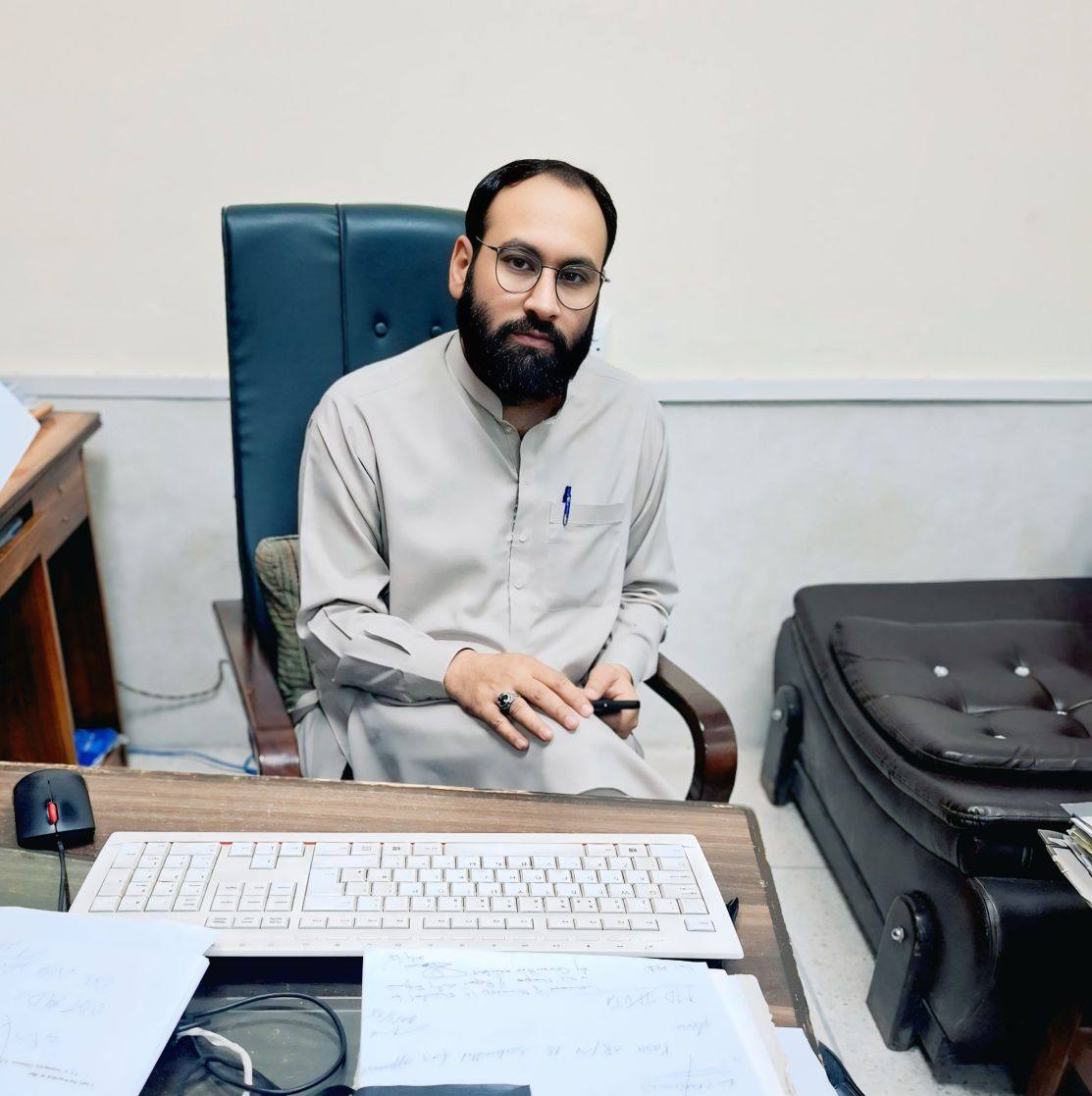
Muhammad Bilal is a Civil Engineer and Construction Specialist with an MS in Engineering Management and 13+ years of professional experience. He shares practical construction knowledge, cost estimation, and RCC site expertise at CivilConstructionGuide.com.