
Introduction – What is Cement?
Cement is the most important binding material in construction. It is a fine powder that, when mixed with water, forms a paste that binds sand, gravel (aggregate), and other materials to form concrete or mortar. Cement hardens and gains strength over time, making it essential for all kinds of structural works from foundations to slabs and walls.
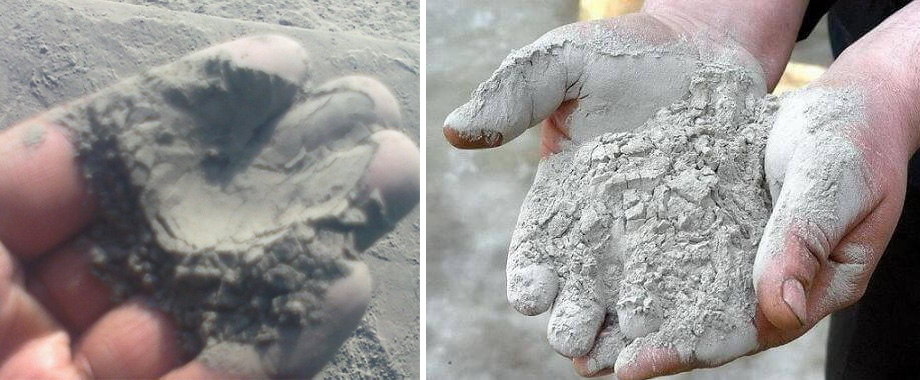
It’s widely used in residential, commercial, and industrial construction around the world due to its strength, durability, and adaptability in different environmental conditions.
1. What is Cement? (International Perspective)
Cement is a hydraulic binding material—meaning it hardens when mixed with water and continues to gain strength even under water. In global construction, the most common type is Portland Cement, which forms the backbone of reinforced concrete and mortar. Its ability to create strong and durable concrete makes it indispensable for building infrastructure worldwide.
2. How Cement Works in Concrete
When cement is mixed with water, a chemical reaction called hydration starts. This reaction produces a paste that coats sand (fine aggregate) and gravel or stone (coarse aggregate). As it hardens, it creates a solid mass that gives concrete its strength.
Concrete is made by mixing:
- Cement
- Sand
- Aggregate (crush / bajri)
- Water
The ratio of these materials depends on the required concrete grade (e.g., M15, M20, M25) which determines its strength.
3. Common Types of Cement
Here are the widely used cement types in construction:
a) Ordinary Portland Cement (OPC)
OPC is the most widely used cement worldwide. It sets and gains strength relatively fast, making it suitable for structural concrete work, foundations, beams, and slabs.
b) Portland Pozzolana Cement (PPC)
PPC contains pozzolanic materials (like fly ash) that enhance durability, reduce heat of hydration, and make it suitable for plastering and mass concrete work.
c) Sulphate-Resistant Cement
Used in environments where sulfate attack from soil or groundwater is a concern (e.g., marine or underground structures).
d) White Cement
White cement is mainly used for decorative finishing and architectural works rather than structural concrete.
(Note: The exact proportions and performance can vary based on the manufacturer and standards followed.)
4. Uses of Cement in Construction
Cement is used in almost every type of building work, including:
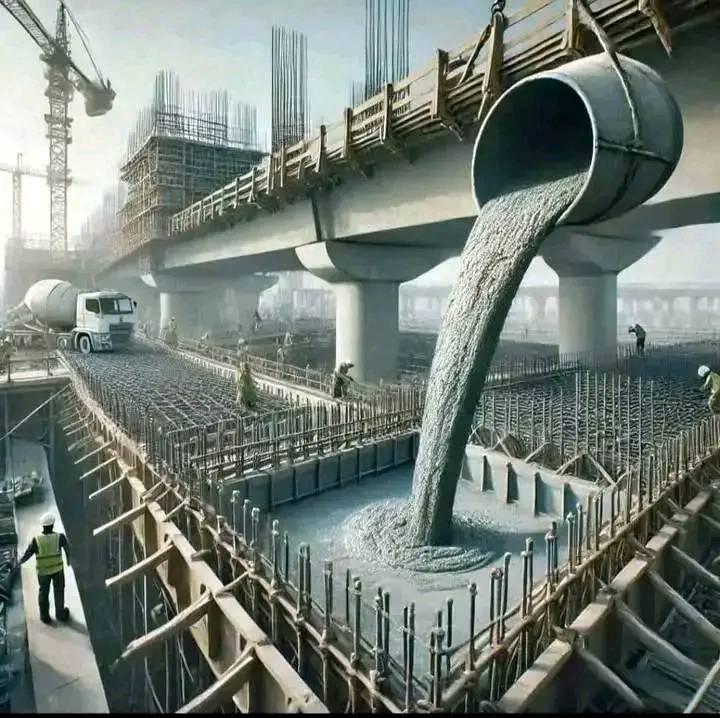
Concrete for Structural Elements
- Foundations
- Footings
- Slabs
- Beams & Columns
- RCC Walls
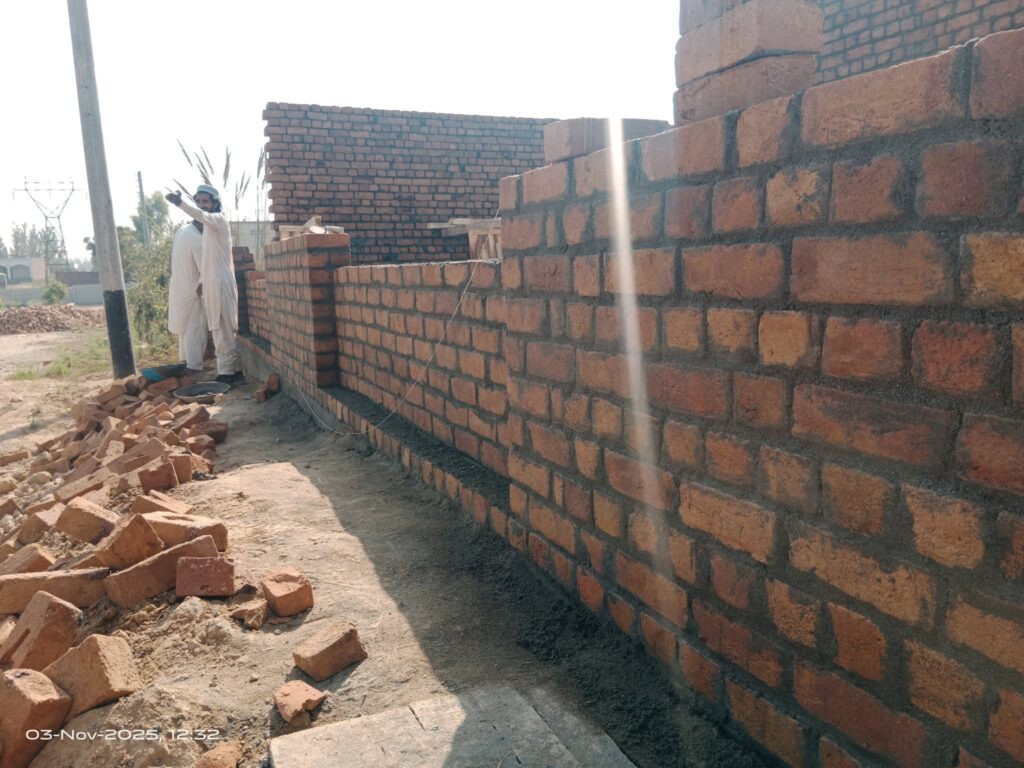
Masonry & Plaster
- Brick/Block masonry
- Internal & external plaster
- Render finishes
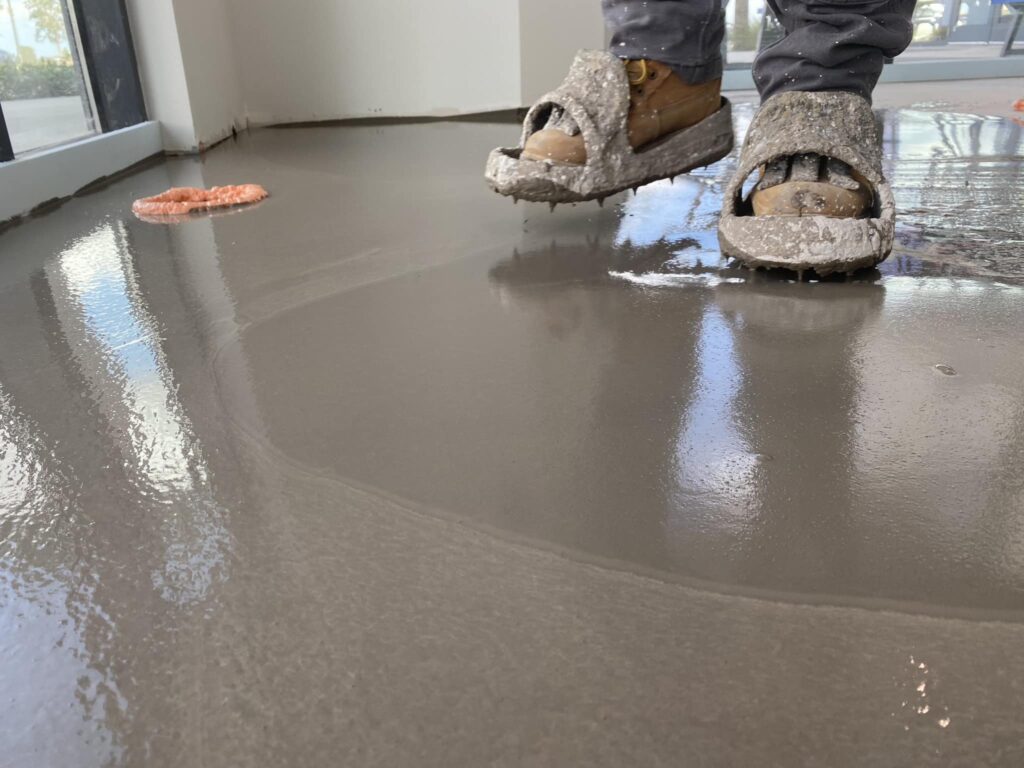
Flooring & Screed
- Base for tiles, marble, terrazzo
- Cement screed for leveling
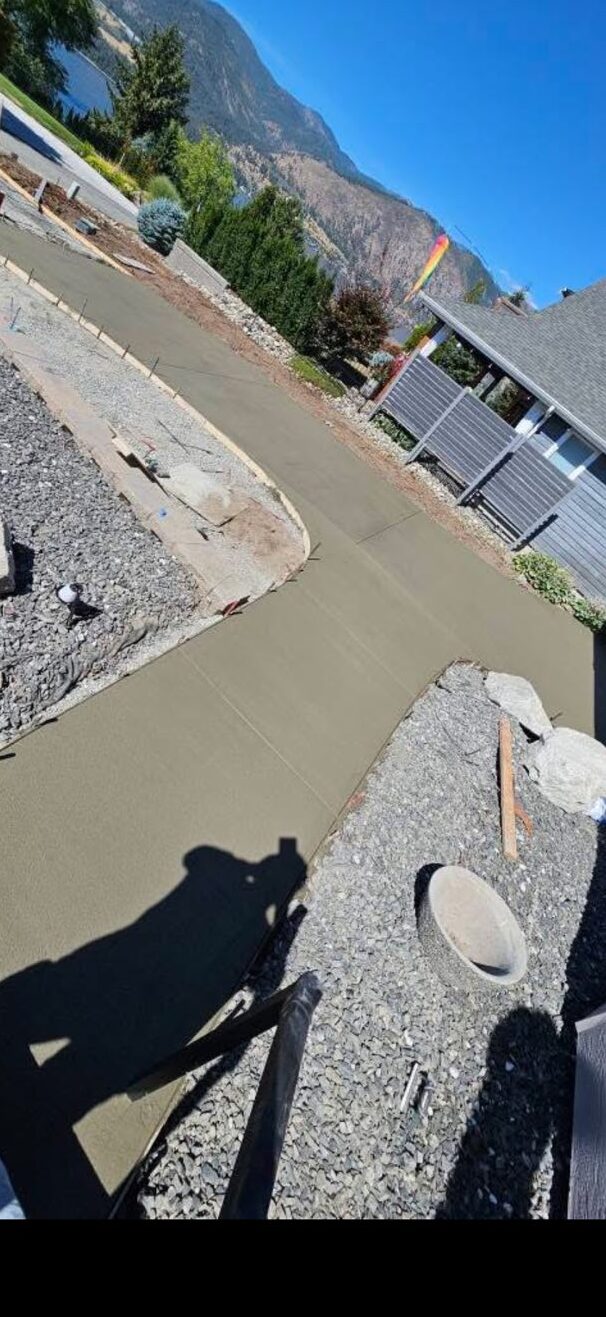
Roads, Pavements & Curbs
- Road base concrete
- Sidewalks
Repair & Grouting Works
- Filling cracks
- Structural repairs
Cement ensures durability, strength, and bonding between materials — making it one of the most versatile building materials.
5. How to Calculate Cement Quantity (Basics)
Understanding material quantity is important for estimating costs and ordering cement accurately.
a) Concrete Quantity Calculation (Example)
Concrete mix ratios are written like 1:2:4, meaning:
- 1 part cement
- 2 parts sand
- 4 parts aggregate
From standard engineering practice:
- 1 cubic meter (cum) of concrete generally requires approximately 6 bags of 50 kg cement for typical mixes such as M15/M20. (Exact quantity may vary by mix design and wastage allowances.)
To calculate:
Cement bags required = Volume of concrete (cu.m) × Cement rate factor
Example:
If slab volume = 10 cu.m,
Cement bags = 10 × 6 = 60 bags
For Detail Calculation Use This onlone Calculator:
Plaster Calculation Calculation (Cement Sand Ratio 1:4)
b) Mortar for Masonry / Plaster
Wall plaster or masonry mortar also uses cement, but in lighter proportions (e.g., 1:4 or 1:5 cement:sand).
👉 You can use online quantity calculators or customized sheets to get accurate quantities for your project.
(Civil engineering sources & material calculators widely teach these formulas for precise estimation.) YouTube
6. Current Cement Rates in Pakistan (2025)
Understanding local cement prices is essential for accurate construction cost estimation.
📌 Cement Price in Pakistan Today (50kg Bag)
As of late 2025, the average cement price in Pakistan is approximately between:
PKR 1,340 – PKR 1,440 per 50 kg bag
Prices vary by brand, city, and transport cost. Priceinfo+1
Brand Examples (50kg Cement)
| Brand Name | Approx Price (PKR) |
|---|---|
| Askari Cement | 1,385–1,395 |
| Bestway Cement | 1,405–1,415 |
| DG Khan Cement | 1,415–1,425 |
| Fauji Cement | 1,395–1,405 |
| Lucky Cement | 1,380–1,390 |
| Maple Leaf Cement | 1,425–1,435 |
(Prices can vary depending on city, delivery charges, and dealer margins.) Priceinfo
White Cement Price (40 kg Bag)
- White cement ranges around PKR 2,050 – 2,250 per 40kg bag. Priceinfo
💡 Tip: Always check delivered cost (including transport & unloading) before ordering for bulk purchase.
7. Tips for Buying Cement in Pakistan
✔ Compare prices from multiple dealers
✔ Buy in bulk to reduce per-bag cost
✔ Inspect bag batch codes for quality control
✔ Ask for short-term price validity (7–15 days) before delivery isi.org.pk
8. FAQs (Frequently Asked Questions)
Q: What cement grade is best for structural work?
For reinforced concrete (RCC), 53 grade cement is preferred for high strength.
Q: Can I store cement for long?
Cement can absorb moisture if stored improperly. Always keep cement bags in a dry, raised, and water-tight place.
Q: Will cement prices keep rising?
Prices can fluctuate with fuel costs, raw material prices, and market demand.
Recommended Brands:
- Lucky Cement → https://www.lucky-cement.com
- DG Khan Cement → https://www.dgcement.com
- Bestway Cement → https://www.bestway.com.pk
- Maple Leaf Cement → https://www.mapleleafcement.com
- Fauji Cement → https://www.fccl.com.pk
Conclusion
Cement remains the foundation of modern construction — literally and figuratively. With its universal use in concrete, mortar, and finishing, understanding its types, quantities, and current prices is vital for any builder, engineer, or homeowner.
Whether you’re planning a small home or a large commercial structure, accurate cement estimation and wise buying can save significant cost while ensuring durable and strong construction.

Muhammad Bilal is a Civil Engineer and Construction Specialist with an MS in Engineering Management and 13+ years of professional experience. He shares practical construction knowledge, cost estimation, and RCC site expertise at CivilConstructionGuide.com.