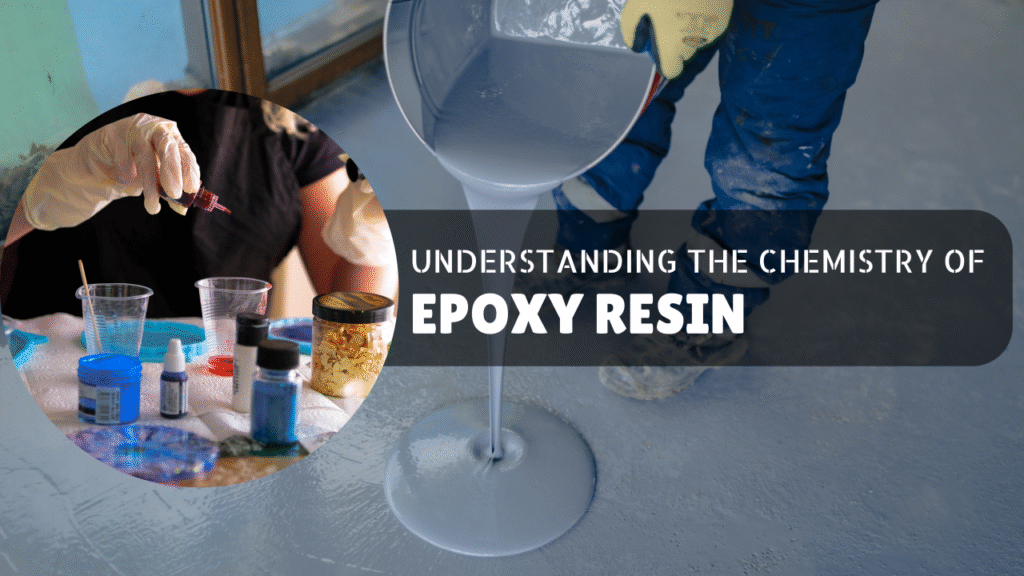
Epoxy flooring has become one of the most popular and durable flooring solutions in homes, industries, commercial buildings, hospitals, and parking areas. It provides a seamless, glossy, waterproof, and chemical-resistant surface that lasts for years.
In this complete guide, we explain what epoxy flooring is, types of epoxy floors, materials used, application method, tools required, advantages, disadvantages, cost, curing time, and maintenance tips.
What is Epoxy Flooring?
Epoxy flooring is a seamless, hard, and durable floor coating made by mixing epoxy resin and hardener. When both chemicals react, they form a strong, plastic-like surface that is resistant to:
- Chemicals
- Heat
- Stains
- Heavy loads
- Water
- Abrasion
Best for:
✔ Factories
✔ Warehouses
✔ Homes
✔ Hospitals
✔ Commercial buildings
✔ Car parking areas
✔ Garages
How Epoxy Works (Scientific Explanation)
Epoxy flooring is created by polymerization, where resin + hardener chemically bond to form a thermoset polymer.
This creates:
- High bond strength
- Hard surface
- Excellent durability
- Abrasion resistance
Types of Epoxy Flooring
1️⃣ Self-Leveling Epoxy Floor
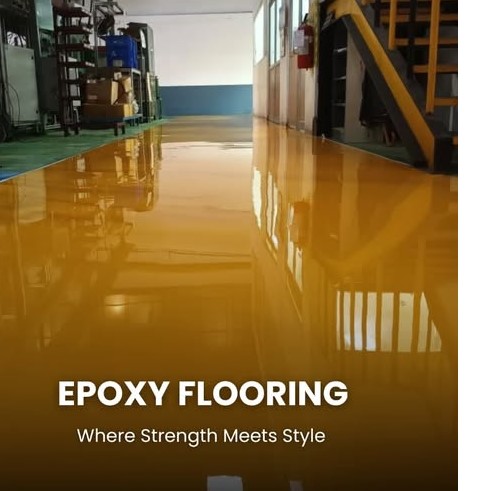
Used for smooth, seamless, glossy floors.
Best for showrooms, homes, offices.
2️⃣ Epoxy Flake Flooring
Contains decorative flakes; available in many colors.
Used in homes and commercial areas.
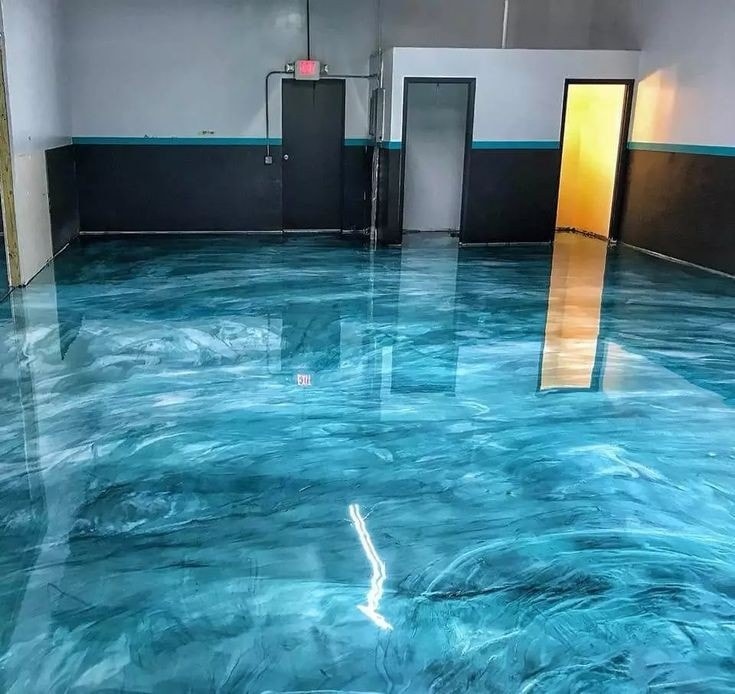
3️⃣ Metallic Epoxy Flooring
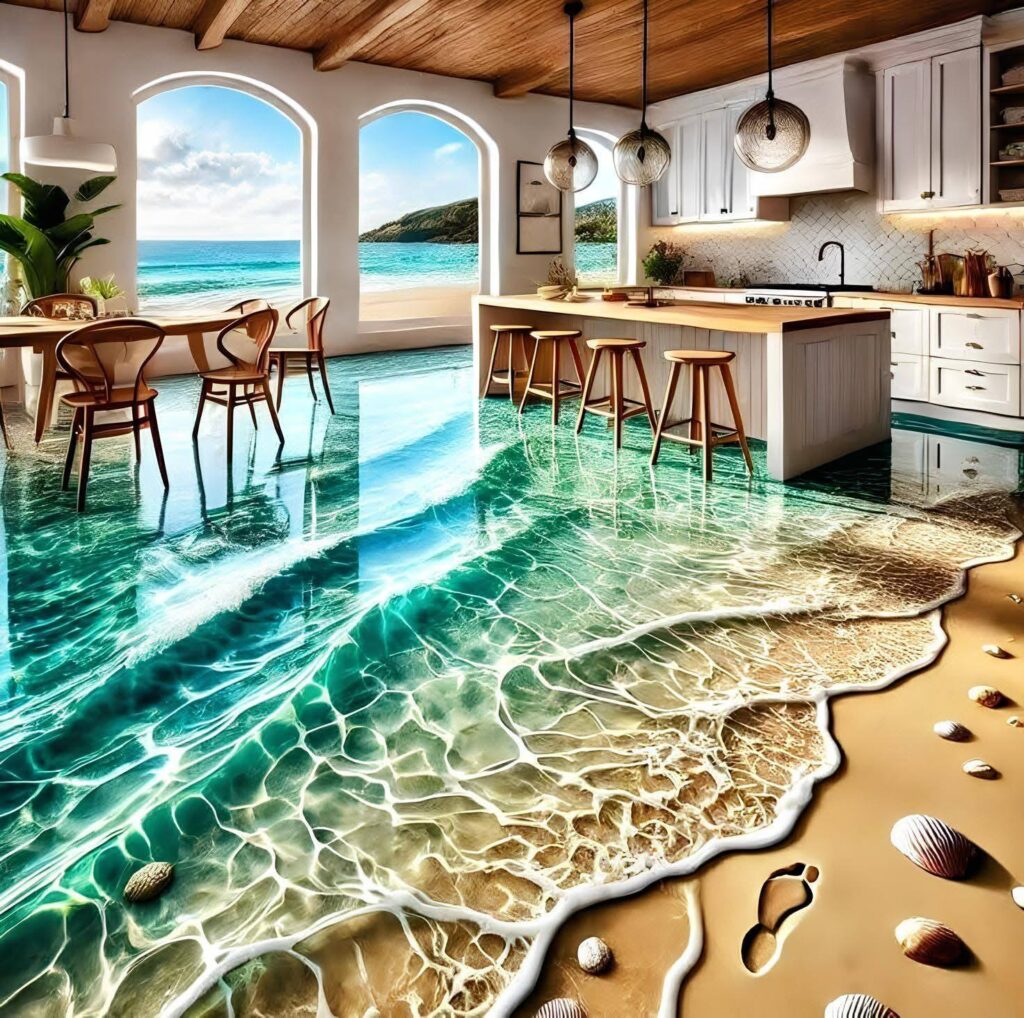
Has a shiny marble-like effect.
Ideal for luxury houses and showrooms.
4️⃣ 100% Solid Epoxy Flooring
Thickest and strongest epoxy type.
Used in industrial floors and warehouses.
5️⃣ Epoxy Mortar Flooring
Combination of epoxy + graded sand.
Best for heavy traffic industrial areas.
6️⃣ Epoxy Terrazzo Flooring
Decorative flooring with chips.
Very expensive but beautiful.
7️⃣ Anti-Static (ESD) Epoxy Flooring
Used in hospitals, laboratories, data centers, and electronics factories.
8️⃣ Epoxy Quartz Flooring
Mixture of epoxy + quartz sand.
Slip-resistant and heavy-duty.
Materials Used in Epoxy Flooring
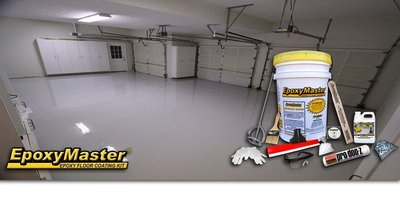
- Epoxy Resin
- Hardener (activator)
- Primer Coat
- Base Coat
- Top Coat / Finish Coat
- Silica Sand
- Decorative flakes (optional)
- Metallic pigments (optional)
Tools Required
- Roller
- Spiked roller
- Trowel
- Mixing drill machine
- Squeegee
- Grinder
- Vacuum cleaner
- Brush
- Measuring containers
Step-by-Step Installation Process
Step 1: Surface Preparation
- Clean the floor
- Remove dust, grease, oils
- Grind the surface for bonding
- Repair cracks and holes
Step 2: Apply Primer Coat
Ensures bonding and smooth base.
Step 3: Mixing Epoxy Resin + Hardener
Mix according to manufacturer ratio (normally 2:1).
Step 4: Apply Base Coat
Spread with a squeegee or roller.
Step 5: Apply Decorative Effects (Optional)
- Flakes
- Metallic pigments
- Quartz
Step 6: Apply Top Coat
Enhances durability and shine.
Curing Time
- Touch dry: 6–12 hours
- Full curing: 48–72 hours
- Heavy traffic: 5–7 days
Advantages of Epoxy Flooring
✔ Highly durable
✔ Waterproof
✔ Chemical-resistant
✔ Easy to clean
✔ Beautiful glossy finish
✔ Long life (10–15 years)
✔ Seamless and hygienic
✔ Slip-resistant options available
✔ Excellent for heavy load areas
Disadvantages of Epoxy Flooring
❌ Requires skilled labor
❌ Takes time to dry
❌ Not good for damp surfaces
❌ Difficult to remove once installed
❌ Strong smell during installation
Epoxy Flooring Cost (Pakistan & International Estimates)
Pakistan:
- Normal Epoxy: PKR 250–450 per sq ft
- Metallic Epoxy: PKR 450–650 per sq ft
- Industrial Solid Epoxy: PKR 350–700 per sq ft
International (USD):
- $2 – $7 per sq ft
- High-end metallic: $8 – $15 per sq ft
Cost depends on:
- Floor condition
- Thickness
- Type of epoxy
- Area size
- Decorative options
Where Epoxy Flooring Is Used
- Homes
- Offices
- Shopping malls
- Schools & hospitals
- Industrial plants
- Garages
- Parking floors
- Cold storage
- Laboratories
- Airports
Maintenance Tips
- Clean the floor regularly
- Avoid dropping heavy metal tools
- Use soft detergents for cleaning
- Reapply top coat every 3–5 years for shine
FAQs About Epoxy Flooring
1. How long does epoxy flooring last?
10–15 years depending on usage and maintenance.
2. Can epoxy be used in homes?
Yes, especially in kitchens, bedrooms, living rooms, and basements.
3. Is epoxy flooring waterproof?
Yes, fully waterproof and chemical-resistant.
4. Which type of epoxy is best?
For homes: self-leveling or metallic epoxy
For industries: 100% solid epoxy or mortar epoxy
5. How long does epoxy take to dry?
48–72 hours for full curing.

Muhammad Bilal is a Civil Engineer and Construction Specialist with an MS in Engineering Management and 13+ years of professional experience. He shares practical construction knowledge, cost estimation, and RCC site expertise at CivilConstructionGuide.com.
Pingback: Superior Concrete Finishes